Orthopedic Surgeries
At RRVC, we provide advanced orthopedic care to restore your pet’s mobility and comfort. Our skilled team performs specialized surgeries, including TPLO (Tibial Plateau Leveling Osteotomy), lateral suture repairs, and complex fracture repair with bone plating, to provide the vital support your pet’s knees and joints need to heal.
TPLO Surgery
Tibial Plateau Leveling Osteotomy (TPLO) is a highly effective orthopedic procedure used to treat cranial cruciate ligament (CCL) injuries in dogs—the equivalent of an ACL injury in people. This ligament is essential for stabilizing the knee (stifle joint). When it tears, it leads to pain, instability and arthritis.
It can also lead to damage to the menisci (crescent-shaped pads of cartilage within the joint that act as shock absorbers). Addressing a CCL tear promptly helps reduce the risk of secondary meniscal injury. During surgical procedures like TPLO, the knee joint is also opened (arthrotomy) and the meniscus is carefully inspected and treated at the same time.
CCL tears are one of the most common causes of hind limb lameness.
What Is TPLO Surgery?
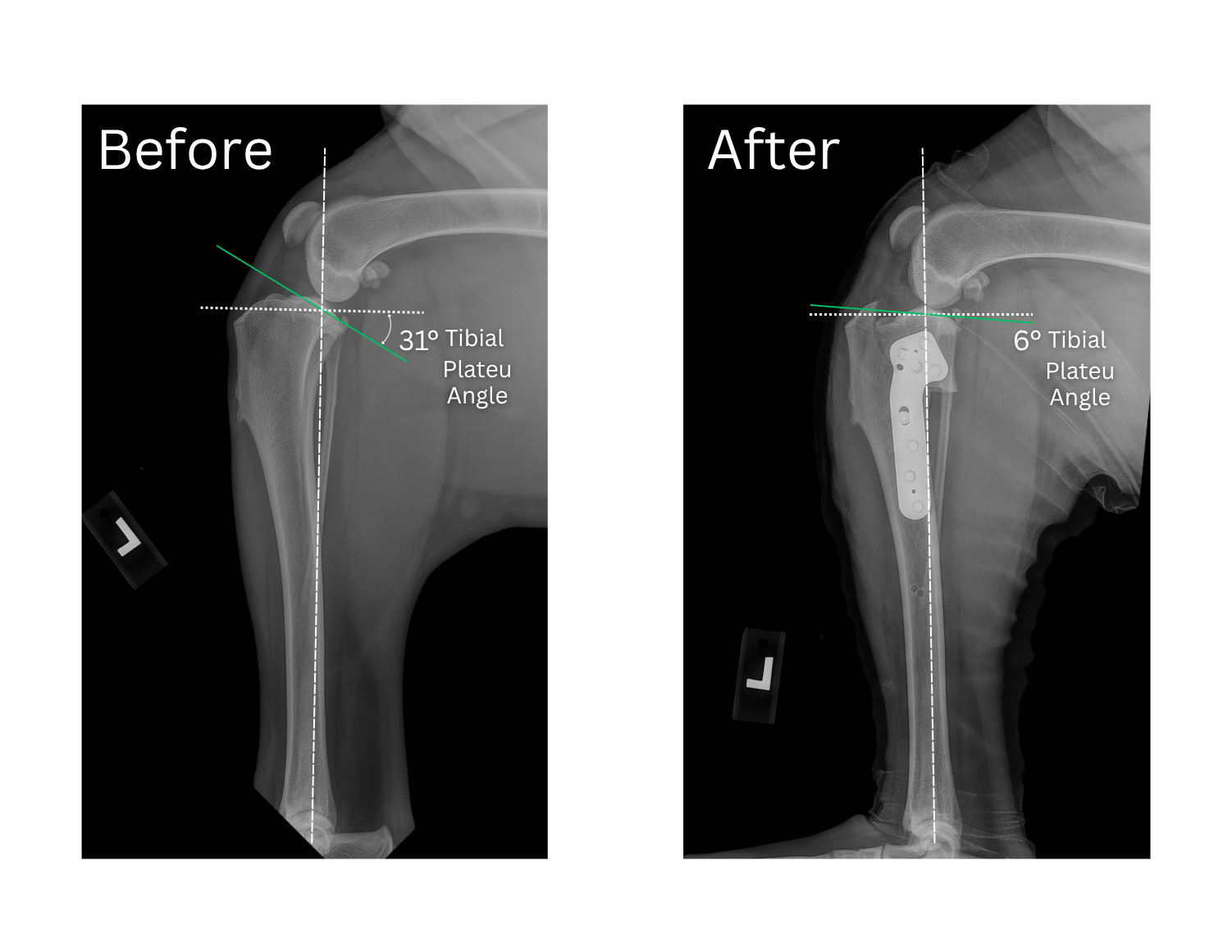
Unlike traditional ligament repair techniques, TPLO surgery stabilizes the knee joint by changing its biomechanics rather than replacing the damaged ligament. Prior to surgery, detailed images of the stifle are taken to calculate the tibial plateau angle in order to make an individualized surgical plan for your pet.
During the procedure, the veterinarian makes a curved cut in the top of the tibia (shin bone) and rotates it to a preplanned point to reduce the slope of the tibial plateau. This adjustment prevents the femur from sliding backward during movement, restoring stability to the joint.
A specialized metal plate and screws are then used to secure the bone in its new position while it heals.
Why Is TPLO Recommended?
TPLO is considered the current gold standard treatment for CCL tears in dogs, especially in active medium to large breed dogs. Benefits include:
- Improved long-term joint stability of the knee
- Faster return to normal activities when compared to other techniques
- Reduced risk of arthritis progression
- High success rate for restoring comfort and mobility
- Protects the meniscus from further damage
What to Expect During Recovery
Recovery from TPLO typically takes 8–12 weeks. During this time:
- Activity must be restricted to allow proper bone healing
- Short, controlled leash walks are gradually introduced
- Pain management and anti-inflammatory medications are provided
- Follow-up visits and X-rays monitor healing progress
Physical rehabilitation may also be recommended to help rebuild strength and mobility.
Is TPLO Safe?
TPLO is a commonly performed and highly successful procedure when done by an experienced veterinary surgeon. As with any surgery, there are risks—such as infection or implant complications—but these are relatively uncommon.
Helping Your Dog Heal
Following your veterinarian’s post-operative instructions is essential for a successful outcome. With proper care and rehabilitation, most dogs return to a comfortable, active lifestyle after TPLO surgery. It is very important that you help your pet maintain a healthy weight to decrease further stress on their joints.
If your dog is limping or showing signs of knee pain, consult your veterinarian to determine whether TPLO or another treatment option is the best choice.

Lateral Suture Repair
Lateral suture repair—also called an extracapsular repair—is a common surgical technique used to treat cranial cruciate ligament (CCL) injuries in dogs. It is designed to stabilize the knee joint using a strong suture placed outside the joint, helping restore comfort and function.
What Is Lateral Suture Repair?
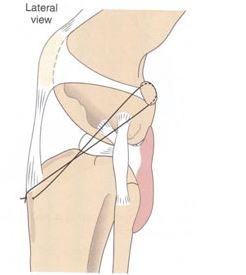
In this procedure, a durable surgical suture is placed around key structures on the outside of the knee joint to mimic the function of the torn CCL. The suture helps prevent abnormal forward movement and rotation of the tibia (shin bone) relative to the femur (thigh bone), which are the main causes of pain and instability after a ligament tear.
As with TPLO surgery, the knee joint is explored at the time of surgery (arthrotomy), the meniscus and internal ligaments assessed and treated if damaged.
Unlike procedures such as TPLO, this technique does not change the bone structure. Instead, it relies on the suture for initial stability while the body forms scar tissue over time to support the joint long-term.
When Is It Recommended?
Lateral suture repair may be a good option for:
- Small to medium-sized dogs and cats
- Less active or older pets
- Cases where a more advanced procedure is not feasible due to co-morbidities
Benefits of Lateral Suture Repair
- Less invasive than bone-cutting procedures
- Shorter surgical time
- Typically lower cost compared to TPLO
- Effective in appropriately selected patients
What to Expect During Recovery
Recovery usually takes about 8–12 weeks and requires careful activity restriction:
- Strict rest and leash walks only during early healing
- Gradual return to normal activity as healing progresses
- Pain management and anti-inflammatory medications
- Follow-up visits to monitor progress
Because the repair relies partly on scar tissue formation, controlled activity during recovery is essential for success.
Potential Considerations
While many dogs do very well with this procedure, outcomes can vary depending on size and activity level. Larger or highly active dogs may place more strain on the suture, increasing the risk of stretching or failure over time.
Long-Term Outlook
With proper case selection and good post-operative care, many dogs regain comfortable use of the limb and return to a good quality of life. Early diagnosis and treatment of a CCL tear also help reduce the risk of additional joint damage, such as meniscal injury or arthritis.
If your dog is limping or showing signs of knee pain, your veterinarian can help determine whether a lateral suture repair or another surgical option is the best choice.
Fracture Repair & Bone Plating Surgery
Root River Veterinary Center provides advanced fracture repair using bone plating techniques to help pets recover safely and return to comfortable, active lives. Whether your pet has experienced a traumatic injury or a complex fracture, our surgical team is equipped to deliver precise, reliable care.
What This Service Includes
Bone plating is a surgical procedure in which a high-strength metal plate and screws are used to stabilize a broken bone. This method allows us to accurately realign the bone and hold it securely in place during healing, promoting proper function and reducing discomfort. Depending on the type of injury, plating may or may not be combined with intramedullary pinning.
We use modern surgical techniques and imaging to ensure each repair is tailored to your pet’s specific injury.
In some cases, orthopedic injuries may require even more advanced treatment and diagnostics than RRVC is able to provide (spinal and pelvic injuries, or some factures involving the joints themselves). In these situations we will likely recommend you go to a specialty referral center for even more advanced care and diagnostics to provide the best possible outcome for your pet.
When Bone Plating Is Recommended
- Complex or unstable fractures
- Multiple bone fragments
- Injuries requiring precise alignment for best long-term function
Our Approach to Care
From diagnosis through recovery, we focus on comprehensive, compassionate care:
- Thorough evaluation and imaging to assess the fracture
- Customized surgical planning based on your pet’s size, age, and activity level
- Advanced anesthesia and monitoring for safety
- Expert surgical repair using high-quality implants
- Detailed post-operative care and follow-up
Recovery & Support
After surgery, our team will guide you through every step of your pet’s recovery:
- Clear instructions for at-home care and activity restriction
- Pain management tailored to your pet’s needs
- Scheduled rechecks and X-rays to monitor healing
- Rehabilitation recommendations when appropriate
Long-Term Results
Our goal is to restore your pet’s mobility and quality of life as quickly and safely as possible. With bone plating, many pets regain excellent limb function and return to their normal routines.
If your pet has suffered a fracture or is showing signs of pain or limping, we’re here to help. Contact our clinic to learn more about our fracture repair services and how we can support your pet’s recovery every step of the way.